
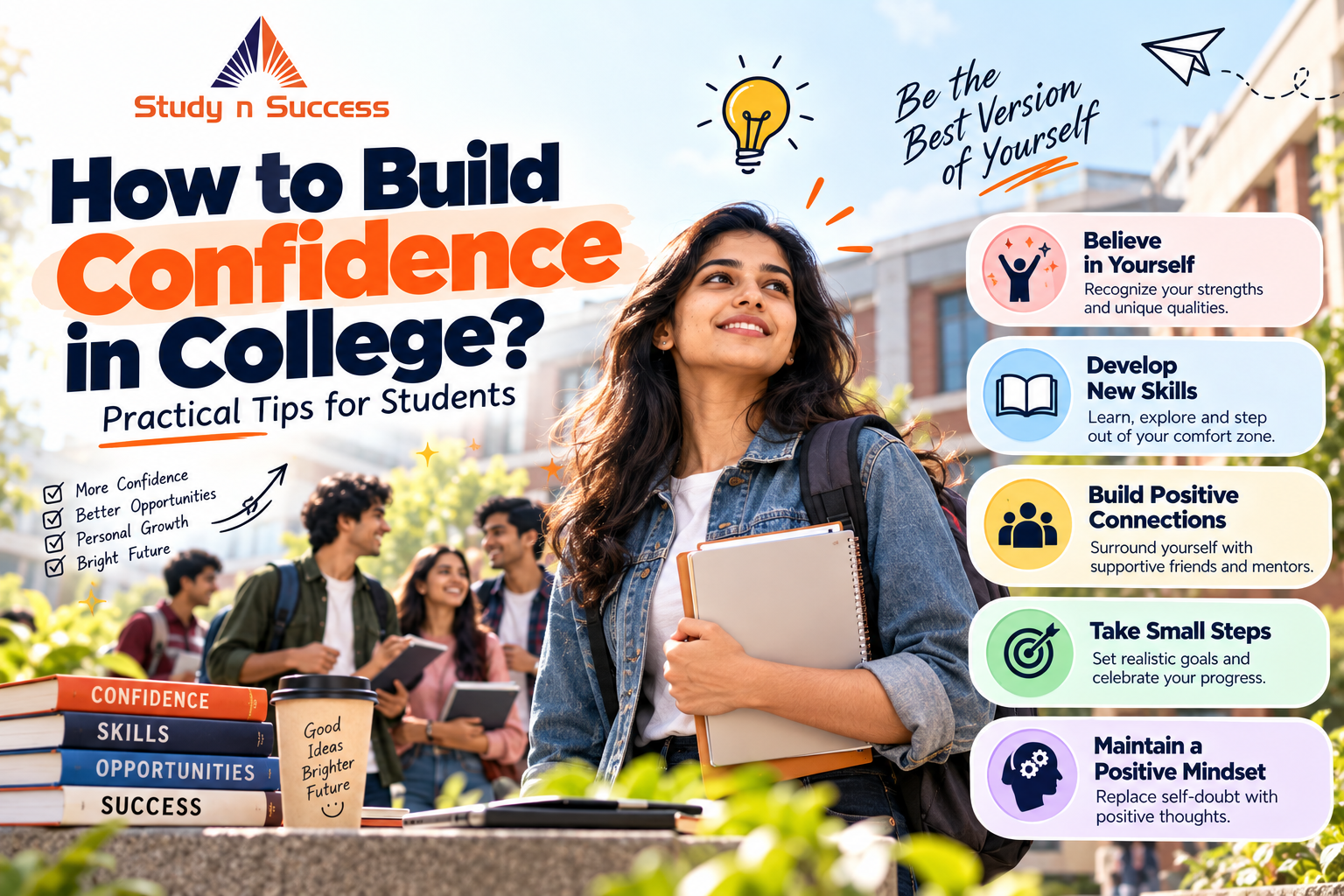
How to Build Confidence in College: Practical Tips for Students
College life is an important stage in a student’s personal and professional journey. It offers opportunities to make friends, learn new skills, participate in activities and prepare for a successful career. However, many students struggle with shyness, self-doubt, public speaking and the fear of being judged by others.
The good news is that confidence is a skill that can be developed with regular practice. Understanding how to build confidence in college can help students express their thoughts, communicate effectively and approach new opportunities with a positive mindset.
At Study N Success, we believe that every student can improve their confidence through small daily actions, consistent learning and the right guidance.
Why Is Confidence Important for College Students?

Confidence helps students participate in classroom discussions, present ideas, build friendships and prepare for interviews. It also encourages them to explore opportunities outside their comfort zone.
Students who develop self-confidence may find it easier to ask questions, work in teams, accept feedback and learn from mistakes. These abilities are valuable not only during college but also in professional life.
Confidence does not mean being perfect or never feeling nervous. It means trusting your ability to learn, improve and handle challenges.
8 Practical Confidence-Building Activities for Students
Here are eight useful confidence building activities for students that you can practise in your daily routine.
1. Practise Speaking in Front of a Mirror
Spend five minutes each day speaking about a familiar topic, such as your hobbies, education or career goals. Observe your posture, facial expressions and speaking speed. This simple exercise can help you become more comfortable expressing yourself.
2. Start Conversations with Classmates
Begin with a greeting, ask about an assignment or discuss an upcoming college event. Small conversations can help you become more comfortable in social situations and develop meaningful connections.
3. Participate in Classroom Discussions
Make a habit of asking one question or sharing one idea during class. Prepare your thoughts beforehand if you feel nervous. Remember that asking questions is part of learning, not something to be embarrassed about.
4. Record Yourself Speaking
Use your phone to record a two-minute video on a topic you understand. Review your clarity, body language and speaking pace. Focus on improving one area at a time instead of criticising every mistake.
5. Join a College Club or Activity
Participate in debates, cultural events, sports, volunteering or group projects. These activities provide opportunities to practise teamwork, communication and leadership in a supportive environment.
6. Learn a New Skill
Choose a useful skill such as public speaking, writing, presentation design or digital marketing. Practise for 20–30 minutes daily and track your progress. Achieving small learning goals can strengthen your belief in your abilities.
7. Maintain a Confidence Journal
Write down one achievement, one challenge you handled and one improvement you want to make each day. Reviewing your progress can help you recognise personal growth that might otherwise go unnoticed.
8. Practise Positive Self-Talk
Replace thoughts such as “I cannot do this” with “I can learn this with practice.” Positive self-talk should remain realistic and encourage you to take action rather than ignore genuine challenges.
How to Build Confidence in College: A Simple Daily Routine
You do not need to make major changes overnight. Start with a manageable routine that fits your college schedule.
- Morning: Spend five minutes practising positive self-talk and setting one goal.
- During college: Start a conversation, ask a question or participate in a discussion.
- Evening: Practise speaking for five minutes or learn a new skill.
- Before sleeping: Write down one thing you did well and one thing to improve.
Follow this routine consistently and gradually increase the difficulty of your challenges. At Study N Success, the focus is on continuous improvement rather than comparing yourself with others.
How Personality Development Helps Students Become Confident
Personality development for students involves improving communication, emotional awareness, body language, interpersonal skills and professional behaviour. These qualities help students present themselves more effectively in academic and workplace environments.
Here are four areas students can work on:
Communication skills: Learn to express ideas clearly, listen carefully and ask relevant questions.
Body language: Practise maintaining a relaxed posture, natural eye contact and attentive expressions.
Time management: Set realistic goals, organise your schedule and complete important tasks on time.
Emotional awareness: Recognise your feelings, manage reactions constructively and accept feedback without taking every comment personally.
Personality development does not mean changing who you are to impress others. It means identifying your strengths and developing the skills needed to reach your goals.
Students preparing for internships, placements and professional opportunities can benefit from practising these skills early. Study N Success encourages students to make self-improvement a regular part of their learning journey.
A Short Conversation About Building Confidence
Student: I feel nervous whenever I have to speak in front of my classmates. How can I improve?
Mentor: Start by practising for two minutes in front of a mirror and gradually speak in front of a friend.
Student: What if I make a mistake or people laugh?
Mentor: Mistakes are a normal part of learning. Focus on communicating your message, learn from the experience and keep practising.
Student: So I do not need to become confident in one day?
Mentor: Exactly! Small steps, regular practice and patience can help you become more comfortable over time.
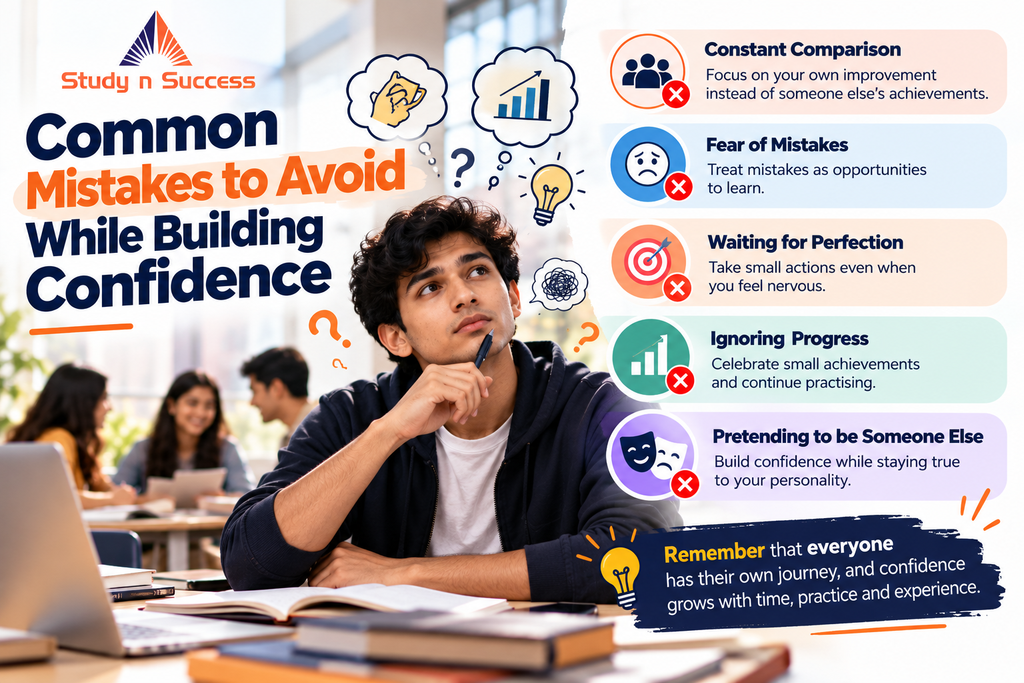
Common Mistakes to Avoid While Building Confidence
Students sometimes slow their progress by comparing themselves with others or expecting immediate results. Avoid these habits:
- Constant comparison: Focus on your own improvement instead of someone else’s achievements.
- Fear of mistakes: Treat mistakes as opportunities to learn.
- Waiting for perfection: Take small actions even when you feel nervous.
- Ignoring progress: Celebrate small achievements and continue practising.
- Pretending to be someone else: Build confidence while staying true to your personality.
Remember that everyone develops at a different pace. Choose practical goals and give yourself time to improve.
Frequently Asked Questions (FAQs)
1. How can I build confidence in college?
Start with small activities such as speaking in class, introducing yourself to classmates, practising presentations and setting achievable daily goals. Consistency is more important than perfection.
2. What are the best confidence building activities for students?
Mirror speaking, public speaking practice, group discussions, journaling, classroom participation and college club activities are useful ways to develop confidence.
3. Can shy students become confident?
Yes. Shy and introverted students can develop confidence by practising communication, building comfortable social connections and gradually trying new experiences.
4. How does personality development help students?
Personality development helps students improve communication, body language, self-awareness, teamwork and professional behaviour. These skills can support academic and career growth.
5. How long does it take to improve confidence?
There is no fixed timeline. Some students notice small improvements within a few weeks, while others need more time. Progress depends on individual circumstances and regular practice.
6. Why is confidence important for career success?
Confidence can help students communicate during interviews, share ideas, collaborate with colleagues and approach new responsibilities. It works best when combined with knowledge, preparation and practical skills.
Conclusion
Building confidence is a gradual process that begins with small, consistent actions. Practising communication, participating in college activities, learning new skills and developing a positive mindset can help you become more comfortable in different situations.
If you want to understand how to build confidence in college, start by choosing just two exercises from this guide and practising them every day. As you progress, add new challenges and recognise your achievements.
With the right habits and a willingness to learn, you can strengthen your confidence, improve your communication and prepare for future opportunities. Study N Success encourages every student to keep learning, keep improving and take the next step towards personal growth.